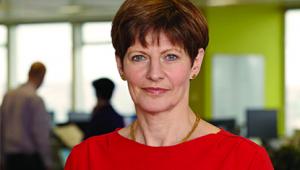



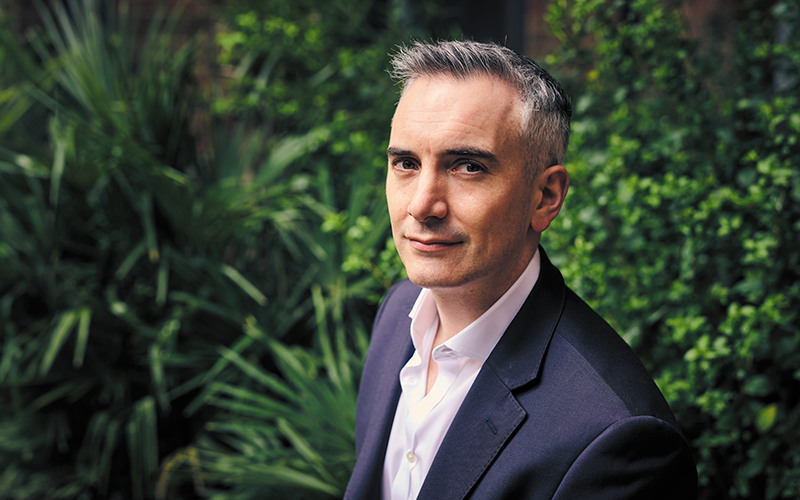
Luke Tryl is between focus groups. He ran one the night before we met, and he’ll be off chairing another later in the day. It’s the way it has to be when your role is to keep your finger firmly on the pulse of public opinion. Through the work of More in Common – the research company set up in the wake of MP Jo Cox’s murder – Tryl and his colleagues focus on the complexity of public opinion in 2026.
Last year, More in Common’s report ‘Shattered Britain’ showed how seven in 10 Britons considered the country to be on the wrong track with many citing the system itself as the problem, not any one party or political leader. Increasingly, Britons say they are willing to ‘roll the dice’ on ‘something new entirely’ – thus leading to an unprecedented level of political fragmentation.
Ahead of the May 2026 local elections, it seems a good time to be talking about what this all means. And it’s the themes that recur in his continual engagement with the British public that have informed Tryl’s preparations for a PF Live session entitled ‘From welfare state to uncertain state: redrawing the social contract’.
The starting point for Tryl’s presentation is that here in 2026, 84 years on from the Beveridge Report and the subsequent introduction of Britain’s welfare state, the social contract it inspired – built on collective responsibility, fairness and mutual trust – now “faces an existential test”.
“So much of our research at the moment points to the fact that the status quo isn’t working for people,” Tryl explains. “Too many of the people I speak to think the social contract is broken; that you can work hard and do the right thing, but you don’t get rewarded. And more than that, there’s a sense that the old certainties – that you could rely on public services, or be looked after in old age – have eroded.”
For Tryl, PF Live offers “an opportunity go back to first principles and ask what it is that people want from the state in the 21st century”. He asks: “Can we have the same big conversation we had post Second World War? I think it’s the right time.”
One of the key events leading to today’s disillusioned populace was the 2008 global recession.
“If you think about the world since then, people in focus groups talk about how it feels like it’s just been one thing after another, a constant sense of degradation and a sense of going backwards.”
People report to Tryl and his colleagues how once normal activities such as taking their children on day trips or paying for their elderly parents’ social care have become unaffordable.
People first
Tryl is keen to point out that it’s the politicians, not the people, who need to recognise their obligation to better engagement.
“One thing that frustrates me is this sense sometimes that the public won’t engage in trade-offs, when they will,” he says. “A big part of the problem has been politicians unwilling to level with the public about some of their choices, and a timidity around having the big conversations. We have an aging population; a commitment to get migration levels down, the rise of AI – it all adds to the challenge of rethinking how the state works. But it will only work if you bring the public with you on that journey and that it is positioned as an opportunity.
“I think there’s a reluctance to engage with the fact that we are in a very different world. We’re not in post-World War settlement territory anymore; a lot has changed, and perhaps we need to be prepared to think more widely – if not more radically, because the word ‘radical’ scares a lot of Brits – about the role of the state in the 21st century.
“You know, Brits are naturally risk-averse people,” says Tryl, “but for some, the risks of the status quo now seem higher than the risks of trying something different.”
Future focus
Tryl sees some useful, if worrying, trends in demographic data.
“Actually, young people are as supportive, if not more so, of things like the triple lock or winter fuel allowance, than pensioners are. Young people just want the same opportunities previous generations had; to be able to buy a house, have a secure job, not be laden with student debt; to feel like the world is working in general.”
However, one of the most interesting if depressing developments has been a broadening of the demographic groups reporting dissatisfaction with the status quo.
”We’re finding that the biggest shift is less intergenerational and more about young graduates in cities and urban areas also now saying that the status quo doesn’t work for them. You know, ‘my student loan repayments are crippling, I’m never going to be able to pay it off, I can’t get the graduate level job I thought I was going to get’. This group, who think they’ve done what they were supposed to – work hard, go to university – now don’t think that’s working either. That’s really interesting, the shift from purely blue collar disillusionment to white collar disillusionment too. Add in that it looks, at least initially, that the biggest impact of AI is going to be on white collar jobs, and you have a very interesting and different style of displacement.”
Social signals
Speaking of technology, how much is the ongoing information revolution changing the way people think about the state?
“What you’ve got is a combination of increasing social media use with the decline of what you might call ‘associational life’,” explains Tryl. “Spaces in which you can socialise in real life. We’ve got pubs closing and the cost of living crisis making socialising harder. I think we undervalue constantly the costs of reducing opportunities for social contact and socialisation.”
One of the biggest examples is working from home, says Tryl.
“For some it makes their lives easier, and there are clearly benefits in terms of employee wellbeing. But we never think of the social cost. What does it mean that people are sometimes going days or weeks without chatting to people outside of their household? When actually, the workplace is probably one of the few places where you can genuinely meet people who are different to you. I do wonder if, in a few years’ time, we will come to look back and think, hmm, did we get the balance right?”
Tryl points to such well-meaning legislation as Martyn’s Law and the burdens it places on making public venues safer: “There’s obviously a really important rationale for that after the Manchester bombing. But at the same time, if the result is that a village hall has to close, I think we’ll have lost something. I don’t think we weigh up that side of the ledger enough. We act on the visible, but not necessarily the invisible.”
Testing times
We discuss how the social contract needs to change, and means testing comes up. In this area, says Tryl, politicians can be clumsy.
”There’s a right and a wrong way to conduct a conversation about means testing and I think the recent winter fuel allowance conversation is a classic example of totally the wrong way,” says Tryl.
“It came out of nowhere, the decision to lower the criteria to the £12,000 pension credit threshold,” says Tryl of the government’s recent U-turn. “If you’re going to have a conversation about means testing, making the argument and laying the groundwork is so important. You’ve got to convince people that working hard and doing the right thing doesn’t mean you lose out. A nurse I was talking to recently told me, ‘I just feel like the people at the top get looked after, the people on benefits get looked after, and I get nothing’. I get that all the time. You’ve got to find ways of making the rest of the social contract work.”
The problem, Tryl believes, is the growth in ‘zero sum’ thinking.
“I wonder if the squeezed middle would be less worried if they knew they could get a GP appointment, or that their kid with SEND was going to be looked after,” he says. “But we are in an age, unfortunately, of growing zero-sum thinking, and that is really bad for having these types of bigger conversations. Because what you find is people simply saying, ‘well, if someone else is gaining, I’m losing out’. The only way to tackle zero-sum thinking is for people to see that things are getting better.”
It’s why Tryl thinks the government missed a trick when it first took office.
“I think the focus on growth was the right one, but it was a mistake to message it to the public as growth. The public doesn’t necessarily think growth benefits them. ‘Living standards’ was always a much better kind of way of doing it.”
A question of local trust
“My favourite slioghtly cheeky question is where we ask who out of Farage, Badenoch and Starmer would you trust to watch your back when you go to the loo – and fewer than a quarter would trust any of them! But then ask about people’s neighbours, and across all of our different population segments there is a high level of trust.”
It’s here that Tryl talks positively about the potential of ground-up activity.
“There is something about the things people associate with the national government, which is broadly the economy and public services not working, yet they can see people in their community trying to do the right thing. People still talk positively about the legacy of the pandemic, when they stepped up to support their neighbours. And on things like climate change, for example, community energy projects are a way of engaging people, trying out new models of public service delivery at the local level. If we can build from there, we could have a better chance of bringing people with us.”
And Tryl is a keen advocate of further devolution. “It’s worked, and it can go further. While we talk about people not trusting national politicians, when you ask them about [such figures as] Andy Burnham, Andy Street or Ben Houchen, they are much more positive. There really is something there about local leaders being seen as delivering.”
Looking ahead
Given his interactions with a routinely disappointed public, I wonder if Tryl feels optimism about the road ahead?
“On the one hand, lots of the conversations I have with the public are very difficult,” says Tryl. “And I have a frustration sometimes when we’re communicating the findings to decision makers or others who are generally more comfortable. That they still don’t get it makes me very frustrated.
“On the flip side, in every conversation I have I am reminded of the underlying decency and sense of fair play amongst the British public. Yes, people feel a bit discombobulated and lost at the moment. But even though it’s serious that the country is divided, more people than not think the differences aren’t so big that we can’t come together.”
Tryl especially finds hope in the high levels of trust people have in their neighbours. “If we didn’t have that, I would be more pessimistic.”
For now, it’s back to the focus groups – an exercise Tryl clearly enjoys.
“Look, what gets me out of bed every day is a sense that so much of what has gone wrong with this country is people in positions of power - and I don’t just mean politicians, I mean institutional leaders, public service leaders, business leaders, leaders of charities – just haven’t taken the time to listen to what the public think. And for as long as I think I can be useful in acting as that conduit between people and those who can make a difference in their lives, I want to keep doing that.”
Quotes from Luke on...
The polling profession
“Sometimes people accuse those of us who do polls and focus groups of reinforcing short-term thinking, but actually it’s the opposite. Because if you can get ahead of public opinion, you can understand where you can build bigger coalitions for change. The example I will talk about at the conference is climate change. It’s part of the next industrial revolution and you are only going to be able to tackle something like that if you bring the public with you.”
AI
“One thing I think about a lot is how we can avoid making the mistakes we made with previous waves of technological change and de-industrialisation. How can we involve people in conversations sooner? And if we can’t put the genie back in the bottle, how can we mitigate some of the negative effects?”
International comparisons
“I’m sceptical about the idea that there is one silver bullet anywhere. Each country faces quite different challenges. I think it is better to think of the challenges as facing Western democracies rather than facing one country and lots of the issues around lower growth, social media, zero-sum thinking are common across these countries.”