



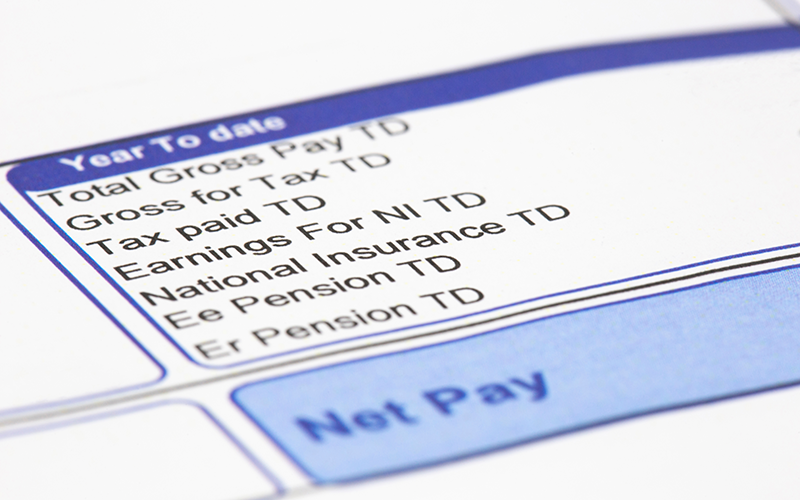
Image | rigsbyphoto / Shutterstock
The UK tax system is a product of decades of countless compromises, fudges, tweaks and re-thinks. Successive governments have sought to clamp down, level up, smooth out and start again through a whole range of direct and indirect tax reforms. As a result, work is now taxed in two ways, with national insurance supplementing income tax.
As Rachel Reeves limbers up for the latest Budget battle, NI is once again in the spotlight in large part thanks to the increase in employer contributions announced in the last Budget. That move further increased the scrutiny on the equity of NI and whether it was actually fit for purpose in 2025.
Reeves will of course be aware of the former government’s promise to abolish NICs altogether. When Jeremy Hunt announced in the Spring Budget in 2024 the then‐government’s longer‐term ambition to abolish NICs altogether for employees and self‐employed people (though not for employers), when conditions were right, to end the ‘double taxation of work’ and create a ‘simpler, fairer tax system that makes work pay’, the reception was mixed.
A long road
National insurance’s history can be traced back to 1911, but it was in 1948 that the Attlee government expanded it into a contributory form of insurance against illness and unemployment, and eventually provided retirement pensions and other benefits
“There was a point in the past where national insurance was a lot more like a European-style contributory element of the system,” explains Isaac Delestre, senior research economist at the Institute for Fiscal Studies, who says that over time, the strength of the link between contribution paid and benefit derived has weakened significantly.
“Obviously, you have to have a certain number of years in which you’ve paid NICs in order to qualify for the state pension, but of course, there are lots of other ways you can qualify for those NIC-able years. And how much you get has no relation to how much you paid in”
So, without the explicit contributory element anymore, many are left wondering why have two parallel income taxes that apply to slightly different bases over slightly different time periods, in the process adding unnecessary complexity and opacity to the system. And that conundrum also raises the issue of how NI creates distortions in the system by differing to income tax and how it is applied to different bases.
“So my broad view would be that it’s not ideal to have these two taxes; and I think there’s a pretty strong argument for rolling them together, at least when it comes to the employee side of national insurance,” says Delestre.
Double benefit
The IFS, among others, has pointed out that were NI and income tax amalgamated into one standard tax it would have two clear benefits: simplification and transparency.
“There is something to be said for a tax system that is easy to understand and where people understand the rates they’re facing and understand and how those change,” Delestre says, pointing out that because national insurance applies only to earnings and not to other forms of income, distortions can be created as a result of having these differing rates on different kinds of income, for instance by incentivising earners to take remuneration in the form of dividends. NI also creates a greater attraction towards self -employment by lowering the effective tax burden on those outside PAYE.
And although the long-running retort to that has centred around the lack of employee benefits such as holiday and sick pay for the self-employed, it’s worth remembering that none of those benefits are paid for by the state.
The second issue of transparency is also important. “I think a lot of people know that the basic rate of income tax is 20%,” says Delestre. “They probably don’t know that for most people actually the basic rate you pay on your earnings is 28%. So I think that that makes things more opaque, and more difficult to understand.”
A new hope?
So what are the alternatives? Pressure group Tax Policy Associates has made the case for abolition loudly in the past few years, arguing that NI is not only unfair but also creates a whole range of incentives to shift people out of employment. “You can change definitions, and create new anti-avoidance rules;” the think-tank said last year. “But if you’re going to have a massive tax difference between employment and self-employment then avoidance and disputes are inevitable.”
Straight abolition is unlikely any time soon, given that in the short run getting rid of NI would represent a huge tax rise for employees, and an equally gigantic tax cut for employers. As Tax Policy Associates admits, “That’s unjustifiable and surely politically unthinkable.”
Whatever the fix – and there are some who see the answer as simply tapering off NI and increasing income tax over time – the UK would have to grapple with the fact that its tax regime remains unbalanced around how tax is applied to work as opposed to capital.
Delestre points out that, “because the tax base is quite poorly designed for those capital incomes, you end up with an unnecessary trade-off under the current system, where capital incomes tend to be taxed at lower rates than labour incomes. But at the same time, because we have this badly designed base, when you increase those rates, you do end up creating distortions and discouraging saving and investment.
“So you end up with this trade-off where you either exacerbate the problem of the capital rates being further away from labour income rates, or you end up disincentivising saving and investment more; so if you just reduced national insurance over time while increasing income tax, all else equal, you’d end up disincentivising saving investment more.
“Ideally what you’d want to do is fix the capital income rate, and then there’d be a much stronger argument anyway for having aligned rates on capital incomes and labour incomes if you put that fix in place.”
Whatever the chancellor decides to do, it’s unlikely to please all the people.