


By Richard Johnstone | 30 January 2012
A senior local government finance officer has warned councils to prepare for additional cuts to their budgets from next year.
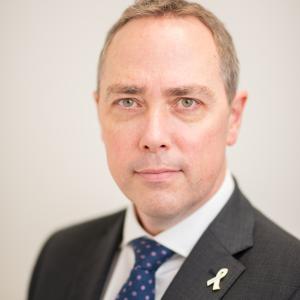
Sean Nolan, president of the Association of Local Authority Treasurers Societies, said George Osborne’s confirmation of further years of funding reductions in the Autumn Statement could lead to cuts for councils from April 2013.Last November, the chancellor announced two more years of spending contraction beyond the current Comprehensive Spending Review period, which ends in 2014/15.
Nolan, who is director of corporate resources at East Sussex County Council, said that the announcement ‘changes everything’, and insisted that the government was ‘not going to wait’ to make further cuts.
This makes the financial year starting in April 2013 – when business rates will also be localised to councils – ‘a massively uncertain time’, he told delegates at the Local Government Association's finance conference last week.
‘A lot of you seem to believe the promises that you will be no worth off than [2012/13 following business rates localisation]. That’s complete tosh.
‘The Autumn Statement overwrites everything. You can expect, and I am expecting, a very significant change in spending totals in 2013/14. They’re not going to wait till 2015/16 [to cut].’
Councils should be flexible in planning for their spending in the years ahead based on this risk, he said.
Nolan’s warningwas echoed by Stephen Jones, director of finance and resources at the LGA.
He told the conference that the Autumn Statement was ‘a game changer because it tells us new things about funding going into the future, and the new things are not particularly good news’.
The conference also debated the government’s controversial plans to localise Council Tax Benefit, which will also take place from April 2013.
The leader of the Liberal Democrats in local government, Gerald Vernon-Jackson, called the idea ‘a very badly thought out policy’.
The benefit will be localised after it has been cut by 10%, and councils will need to introduce new eligibility criteria. However, the government has also said that it must continue to be paid to pensioners.
Vernon-Jackson said that support for pensioners makes up around 50% of the total funding. He estimated that a further 25% of recipients would also be exempt from reductions in support due to councils’ duties to support vulnerable groups and tackle child poverty.
This could lead to most of the 10% budget cut falling on the remaining 25% of recipients, he said, which is support provided to low-paid people in work.
He confirmed that the LGA had lobbied the Department for Communities and Local Government to expand the localisation to cover the rules around all council tax discounts.
‘What we have tried to say is that we may be able to come up with a different way of doing this.’
This included the option that the single person council tax discount would not be available to higher rate taxpayers, he said.