


27 January 2012 | By Nick Mann
The chief executive of one of the councils chosen to run a whole-place Community Budget pilot has warned that the scheme involving his local authority will not go ahead unless a ‘sustainable’ plan can be agreed with the government.
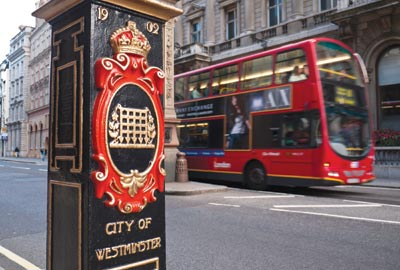 Four areas were chosen before Christmas to run the pilots (see panel),
including a ‘tri-borough’ partnership between Hammersmith & Fulham,
Kensington & Chelsea and Westminster councils in west London.
Four areas were chosen before Christmas to run the pilots (see panel),
including a ‘tri-borough’ partnership between Hammersmith & Fulham,
Kensington & Chelsea and Westminster councils in west London.
Under the scheme, councils will work with local partners to pool various central government funding streams into a single pot to better address local needs. Councils and their partners are now working with central government to finalise how the pilots will work when they are introduced in April 2013.
But Mike More, chief executive of Westminster City Council, told Public Finance that the approach developed over the next six months would have to be acceptable to his council and all the partners for the pilot to happen.
‘It’s a bit like a procurement exercise. We’re saying “these are the areas we want to improve” and can we thrash through these in six months and then see whether we have come up with something that’s sustainable for all partners,’ he said.
‘It either works or it doesn’t. It’s acceptable or it isn’t,’ he said.
He was anticipating ‘very detailed negotiations’ with government, and added: ‘I want to prove the concept one way or another.’
If the pilot did get off the ground, it could make ‘quite significant contributions’ towards the reductions in spending the tri-borough were looking to achieve, he said.
Dan Gascoyne, assistant director of corporate policy, strategy and partnerships at Essex County Council, said that making his area’s Community Budget pilot work would be ‘challenging’. But he told PF that the council and its partners were ‘all trying to remain entirely optimistic’.
‘By October we have to develop an operational plan setting out what operating under a single budget or pooling resources might mean and what needs to happen centrally and locally for things to change. It will have to be a proper plan.’
Gascoyne said he was ‘very confident’ that Essex could get its pilot off the ground and deliver the aims it plans to set for the project.
He explained that it would build on Essex’s earlier work as one of 16 areas delivering a Community Budget focused on families with complex needs, launched in April 2011.
And he cited the government’s direct involvement in the pilots, which has seen civil servants deployed into each of the areas involved, as evidence that the initiative would be more successful than the Total Place pilots run under the previous Labour administration.
‘With Total Place we didn’t have the capacity and time from central government to make that work,’ he explained. ‘I think government is very serious about making this work.’
Early government involvement was also highlighted by Julie Gill, director of resources at Cheshire West and Chester Council, who revealed the council had already had ‘very positive’ meetings with the Department for Communities and Local Government about the pilot.
‘We’re looking at having fairly senior people come in from across Whitehall – civil servants who can come in and look at overcoming barriers,’ she told PF.
Speaking at an evidence session on Community Budgets held by the Commons’ Communities and Local Government Committee on January 16, DCLG minister Baroness Hanham acknowledged the need for cross government involvement ‘to make them work’. But she said that Community Budgets were ‘here to stay’.
Alongside the four whole-place pilots, 10 neighbourhood-level pilots were also chosen. These range from three council wards working together to invest in family support services in Newcastle to funding for services being devolved to a resident-led trust in Tunbridge Wells.



The chief executive of one of the councils chosen to run a whole-place Community Budget pilot has warned that the scheme involving his local authority will not go ahead unless a ‘sustainable’ plan can be agreed with the government.
Four areas were chosen before Christmas to run the pilots (see panel),
including a ‘tri-borough’ partnership between Hammersmith & Fulham,
Kensington & Chelsea and Westminster councils in west London.Under the scheme, councils will work with local partners to pool various central government funding streams into a single pot to better address local needs. Councils and their partners are now working with central government to finalise how the pilots will work when they are introduced in April 2013.
But Mike More, chief executive of Westminster City Council, told Public Finance that the approach developed over the next six months would have to be acceptable to his council and all the partners for the pilot to happen.
‘It’s a bit like a procurement exercise. We’re saying “these are the areas we want to improve” and can we thrash through these in six months and then see whether we have come up with something that’s sustainable for all partners,’ he said.
‘It either works or it doesn’t. It’s acceptable or it isn’t,’ he said.
He was anticipating ‘very detailed negotiations’ with government, and added: ‘I want to prove the concept one way or another.’
If the pilot did get off the ground, it could make ‘quite significant contributions’ towards the reductions in spending the tri-borough were looking to achieve, he said.
Dan Gascoyne, assistant director of corporate policy, strategy and partnerships at Essex County Council, said that making his area’s Community Budget pilot work would be ‘challenging’. But he told PF that the council and its partners were ‘all trying to remain entirely optimistic’.
‘By October we have to develop an operational plan setting out what operating under a single budget or pooling resources might mean and what needs to happen centrally and locally for things to change. It will have to be a proper plan.’
Gascoyne said he was ‘very confident’ that Essex could get its pilot off the ground and deliver the aims it plans to set for the project.
He explained that it would build on Essex’s earlier work as one of 16 areas delivering a Community Budget focused on families with complex needs, launched in April 2011.
And he cited the government’s direct involvement in the pilots, which has seen civil servants deployed into each of the areas involved, as evidence that the initiative would be more successful than the Total Place pilots run under the previous Labour administration.
‘With Total Place we didn’t have the capacity and time from central government to make that work,’ he explained. ‘I think government is very serious about making this work.’
Early government involvement was also highlighted by Julie Gill, director of resources at Cheshire West and Chester Council, who revealed the council had already had ‘very positive’ meetings with the Department for Communities and Local Government about the pilot.
‘We’re looking at having fairly senior people come in from across Whitehall – civil servants who can come in and look at overcoming barriers,’ she told PF.
Speaking at an evidence session on Community Budgets held by the Commons’ Communities and Local Government Committee on January 16, DCLG minister Baroness Hanham acknowledged the need for cross government involvement ‘to make them work’. But she said that Community Budgets were ‘here to stay’.
Alongside the four whole-place pilots, 10 neighbourhood-level pilots were also chosen. These range from three council wards working together to invest in family support services in Newcastle to funding for services being devolved to a resident-led trust in Tunbridge Wells.
The four whole-place Community Budget pilots are...
Cheshire West and Chester
The council and its partners will explore how to pool a single budget of between £3-4bn over 150 local services
Greater Manchester
10 councils and their partners aim to use joined-up local investment to reduce levels of dependency and to help create 50,000 jobs over the next four years
West London
The ‘tri-borough’ councils will focus on skills and training for over-16s, speeding up family courts and curbing youth violence and anti-social behaviour
Essex
The county council and its partners plan to pull together a single set of objectives for the £10.4bn they spend on public services so it can be used more effectively and efficiently