



A leading economist has warned the UK government that cutting the deficit risks stalling economic growth.
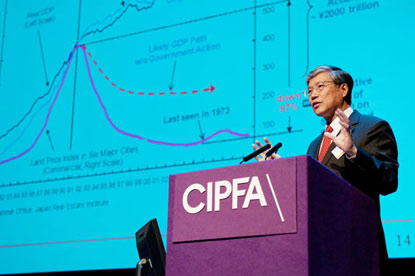 Richard
Koo, the chief economist of Nomura Research Institute, told the CIPFA
conference in Birmingham this morning that Britain, Europe and the US face a
'balance sheet recession' – where individuals and private sector companies pay
down debt incurred before the recession in 2008/09.
Richard
Koo, the chief economist of Nomura Research Institute, told the CIPFA
conference in Birmingham this morning that Britain, Europe and the US face a
'balance sheet recession' – where individuals and private sector companies pay
down debt incurred before the recession in 2008/09.He said the UK is ‘at the entry point’ when companies won’t borrow, even when interest rates are close to zero, because they are focused on reducing debt.
Koo, an expert on the Japanese economic and banking problems between 1990 and 2005, told delegates that these same problems happened in Japan during the 1990s. The lesson from Japan was that, due to the lack of demand in the private sector, the government needed to keep spending to maintain economic growth until the private sector is ready to borrow again.
He told the conference that Japanese government spending had helped maintain growth, but added that, at 7.3% of gross domestic product, the UK government’s economic stimulus was not enough to cover for the savings of 8.7% of GDP that the private sector had made. ‘In the UK I would argue that isn’t large enough to stabilise the British economy.’
The coalition government is reducing spending now. But the Japanese experience has twice shown that if this happens before the private sector is willing to borrow again, the ‘whole thing will come crashing down’, Koo warned.
There were two bouts of negative growth, in 1997 and 2001, when the Japanese government tried to cut the deficit. Five quarters of negative growth followed and the Japanese budget deficit then increased overall because of the need to mitigate the impact of this crash.
Koo said this should stand as a warning to ‘all the capitals in the world’ that are debating when to cut their deficit.
‘The point is that if you are in this type of recession, which happens only after the busting of a nationwide asset bubble financed by debt, the private sector decides to minimise debt rather than maximise profits. If the government doesn't take the action to keep the situation from collapsing, then you have larger problems going forward.’
Asked from the floor about ‘Japan exceptionalism’ – that the country is unique in being able to find domestic buyers for government bonds – Koo said: ‘The UK is no longer a low-savings country that has to rely on Chinese or Arab countries to buy these bonds. UK institutional investors realise that at the end of the day you have to buy these bonds or you have to move the money abroad.’
To view Richard Koo's presentation from this session click here