


By Lucy Phillips
March 24, 2011
Local Enterprise Partnerships are to be tested to the limit as hard-pressed councils strive to be part of the 21 new ‘enterprise zones’ announced in the Budget.
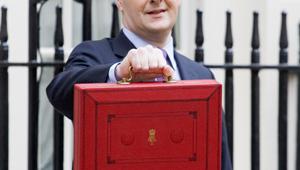
In a Budget focused on boosting growth, Chancellor George Osborne named 11 LEPs – alliances between local businesses and councils that are replacing regional development agencies – that would benefit from enterprise zone incentives. The exact locations of four vanguard areas – Nottingham Boots Campus, Liverpool Waters, Manchester Airport and London’s Royal Docks – were announced the following day.
The remaining seven LEPs (Birmingham & Solihull; Leeds City Region; Sheffield City Region; West of England; Tees Valley; North Eastern; the Black Country) will now have to decide where to locate their enterprise zone, while a bidding process will be opened up to determine which other ten LEPs will site zones. The results of the latter will be revealed in the autumn.
In his Budget statement, Osborne said: ‘Helping all parts of our country succeed is also the purpose behind the new enterprise zones we launch today.
‘In return for radically reduced planning restrictions, we will let local authorities keep all business rate growth in their zone for a period of at least 25 years to spend on development priorities.’
Super-fast broadband will also be rolled out in the zones. Businesses that move into the areas within this Parliament will also benefit from a 100% rates discount for the first five years.
But the enterprise zones, a throw-back to a flagship 1980s Thatcher policy, came under considerable fire, not least for their ‘divisive’ impact on relations between LEP members.
Andrew Sissons, a researcher into enterprise zones for the Work Foundation, told Public Finance: ‘The place that gets the enterprise zone will be more prosperous... If you are a council within an LEP, every council will want it within their boundaries. You will see some pretty frantic negotiations within LEPs. There is the potential for it to cause division if not managed carefully.’
But Sissons also warned that it would take years for enterprise zone gains to kick in and for councils to make any ‘major returns’, which would be short-lived anyway. Research from the previous generation of enterprise zones showed they stimulated short-term investment, which lasted no more than three years before the area began a long-term reversal back into depression.
Katie Schmuecker, a senior research fellow for IPPR North, told PF: ‘We have been here before and, unfortunately, if you look at all the evaluations of past enterprise zones, they proved more successful at encouraging businesses to relocate from one area to another than creating new jobs... . If they don’t do that, all we have done is reshuffle the deckchairs, not boost growth.’
She added: ‘As a major plank of the [government’s] growth strategy for the regions, it’s a little wanting.’
When it came to locating enterprise zones, Schmuecker said: ‘It’s going to be a real test for LEPs to see whether they can agree what is their shared priority area.’
Andy Sawford, chief executive of the Local Government Information Unit, criticised the government for ‘picking winners’ in the new era of localism by restricting benefits from enterprise zones ‘to just a few favoured councils, rather than opening them up to all’.
But Local Government Secretary Eric Pickles hailed the enterprise zones as a ‘springboard for private sector growth and wider regeneration’. He added: ‘Enterprise zones are unashamedly pro-growth, with lower taxes and reduced regulations to attract business, but they are also unashamedly localist, keeping power and profits within the local areas so communities benefit.’
Enterprise zones formed part of a Budget that otherwise did very little to help local government, currently wrestling with major funding cuts, commentators said.
Iain Hasdell, partner and UK head of local and regional government at KPMG, said the chancellor had done nothing to offset the effects of council budget cuts, nor anything to ‘invest in the coalition’s localism ethos’. ‘[There was] no new financial, as opposed to policy, muscle to be put behind the divestment of public services and assets to the private and third sectors and to community groups,’ he added.
In his Budget speech, Osborne did refer to the fact that 100% of councils in England have committed to freezing or reducing their council tax for the year from April. He also announced a series of ‘land auction’ pilots, will enable local authorities to auction off planning permission for their property, and has allocated £100m extra to help councils repair potholes.